
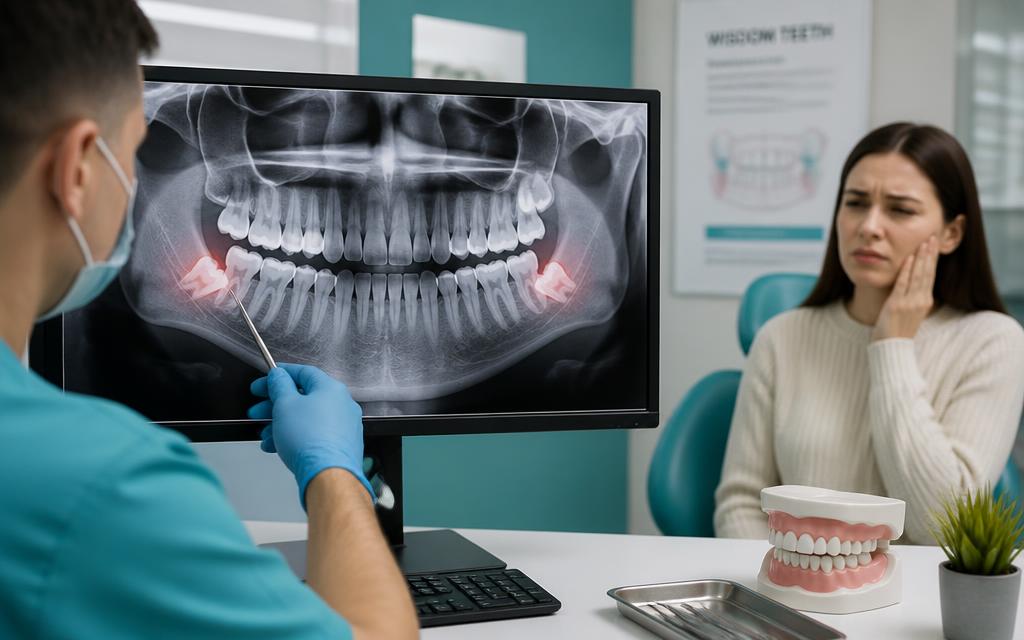
Common symptoms
- • Pain or pressure at the back of the jaw
- • Swollen, tender gum over a partly erupted tooth
- • Difficulty opening the mouth fully
- • An unpleasant taste or bad breath from around the tooth
- • Pain that spreads to the ear or jaw joint
Likely causes
- • A wisdom tooth partially erupting through the gum (pericoronitis)
- • Impacted wisdom teeth pressing against neighbouring teeth
- • Food and plaque trapped under a flap of gum over the tooth
- • Infection developing around a partly erupted tooth
What can help tonight
- • Rinse with warm salty water several times a day
- • Keep the area as clean as possible, brushing gently
- • Use pain relief as directed if it is safe for you
- • Avoid biting down directly on the area
This is general information, not a diagnosis. Always follow the advice given to you by your dentist.
When it's an emergency
- • Swelling spreading to the neck or affecting swallowing or breathing
- • Being unable to open your mouth beyond a small gap
- • High temperature with severe pain and feeling very unwell
If any of these apply to you, call 999 or attend A&E now. Outside these signs, NHS 111 can advise out of hours.
What a ToothAid dentist can do online
Assessment, advice and appropriate prescription treatment can begin online. Where there are clear signs of infection around an erupting wisdom tooth (pericoronitis), a dentist may prescribe antibiotics to settle it, alongside advice on keeping the area clean.
What needs in-person treatment
If wisdom teeth are repeatedly causing infection or pain, extraction or a surgical assessment requires a face-to-face appointment, sometimes with a referral for an X-ray or specialist opinion.
Frequently asked questions
Do all wisdom teeth need to be removed?
No. Many wisdom teeth cause no problems and do not need removal. Extraction is usually only recommended when a tooth causes repeated pain, infection or damage to neighbouring teeth.
Why does it hurt to open my mouth fully?
Inflammation and swelling around an erupting or infected wisdom tooth can affect the nearby jaw muscles, making it uncomfortable or difficult to open wide.
Can I treat wisdom tooth infection myself?
Salt water rinses and careful cleaning can help manage mild symptoms, but a recurring or worsening infection needs assessment, and sometimes antibiotics or extraction, from a dentist.
How long does wisdom tooth pain usually last?
Mild discomfort during eruption can come and go over days or weeks. Pain that is severe, worsening, or lasts more than a few days should be assessed rather than waited out.