
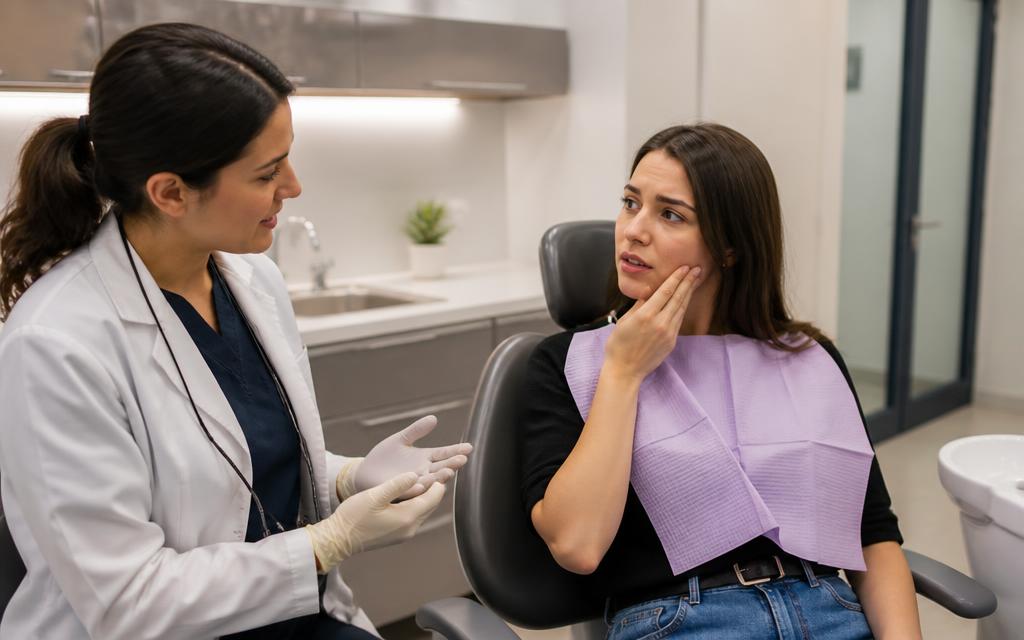
Common symptoms
- • Pain and swelling of the gum over a partly erupted wisdom tooth
- • A bad taste or bad smell from the area
- • Difficulty opening your mouth fully
- • Pain on swallowing or when biting on the swollen gum
- • Swollen glands under the jaw and feeling generally unwell
Likely causes
- • A gum flap (operculum) trapping plaque and food debris
- • The opposing upper tooth biting onto the swollen gum
- • Difficulty cleaning right at the back of the mouth
- • Being run down, stressed or unwell
- • Previous episodes, which make recurrence more likely
What can help tonight
- • Rinse thoroughly with warm salty water or a chlorhexidine mouthwash
- • Clean the area carefully with a small soft or single-tufted brush
- • Take pain relief as directed on the packet
- • Eat soft food and keep your fluids up
- • Do not place aspirin directly on the gum
This is general information, not a diagnosis. Always follow the advice given to you by your dentist.
When it's an emergency
- • Swelling spreading to the cheek, under the jaw, the eye or the neck
- • Difficulty breathing or swallowing, or drooling
- • Being unable to open your mouth more than a couple of centimetres
- • High temperature with rapidly worsening pain
If any of these apply to you, call 999 or attend A&E now. Outside these signs, NHS 111 can advise out of hours.
What a ToothAid dentist can do online
A video consultation lets a dentist check how far the swelling extends, confirm there are no signs of a spreading infection, and advise on cleaning and pain relief. Antibiotics may be prescribed where clinically appropriate, for example with facial swelling, fever or restricted opening.
What needs in-person treatment
Recurrent pericoronitis usually needs the area cleaned under the gum flap, and sometimes removal of the wisdom tooth or the opposing upper tooth. ToothAid can refer you to a participating practice for assessment and X-rays.
Frequently asked questions
Will pericoronitis come back?
It often does while the gum flap remains. Recurring episodes are the usual reason a wisdom tooth is removed.
Do I always need antibiotics?
No. Mild localised cases usually settle with thorough cleaning and rinsing. Antibiotics are for spreading infection, fever or restricted opening.
Why can't I open my mouth properly?
Inflammation irritates nearby chewing muscles, causing spasm. Significant restriction is a red flag and needs urgent assessment.
Does the wisdom tooth always have to come out?
Not always. If episodes are infrequent and mild, the tooth can often be monitored and kept clean.