
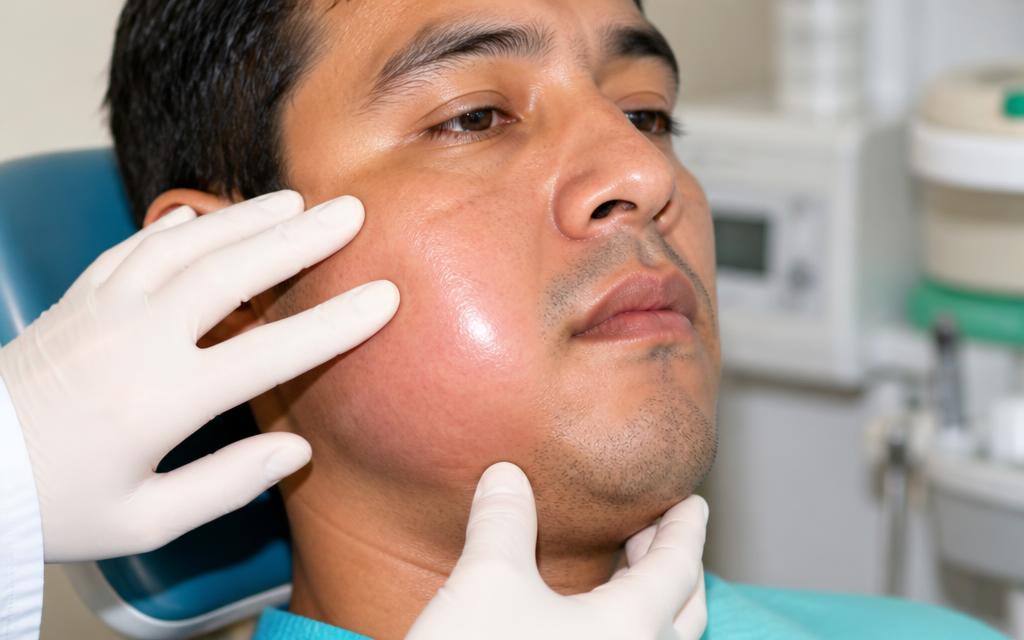
Common symptoms
- • Intense, throbbing pain that may spread to the jaw, ear or neck
- • Swelling of the gum, face or jaw
- • A tender, sometimes visible, pimple-like swelling on the gum
- • A bad taste or smell in the mouth if it drains
- • Feeling generally unwell, feverish or having swollen glands
Likely causes
- • Untreated tooth decay reaching the nerve
- • Advanced gum disease creating a pocket of infection
- • A cracked or previously injured tooth becoming infected
- • A failed root canal treatment or restoration
What can help tonight
- • Do not attempt to burst or drain any swelling yourself
- • Keep hydrated and rest
- • Take pain relief as directed if safe for you
- • Rinse gently with warm salty water
- • Seek assessment quickly rather than waiting for it to settle on its own
This is general information, not a diagnosis. Always follow the advice given to you by your dentist.
When it's an emergency
- • Swelling spreading to your eye, neck or floor of the mouth
- • Difficulty breathing, swallowing, or opening your mouth fully
- • Feeling very unwell, confused, or a high temperature that will not come down
If any of these apply to you, call 999 or attend A&E now. Outside these signs, NHS 111 can advise out of hours.
What a ToothAid dentist can do online
An online assessment can confirm how urgent your situation is and arrange the right onward care quickly. Where there is clinical evidence of spreading infection, a dentist may prescribe antibiotics to control it while arranging drainage — antibiotics alone do not cure an abscess, since the source of infection still needs treating.
What needs in-person treatment
An abscess almost always needs in-person treatment to drain the infection and treat its source, for example root canal treatment or extraction. ToothAid will refer you to a participating practice for this if your symptoms are not an emergency.
Frequently asked questions
Can a dental abscess go away on its own?
It may seem to settle if it drains, but the underlying infection is very unlikely to clear without treatment and can flare up again or spread. Assessment is always recommended.
Will antibiotics cure my abscess?
Antibiotics can help control spreading infection in some cases, but they do not remove the source of the infection. The tooth or gum problem causing the abscess still needs to be treated, usually in person.
How do I know if my abscess is an emergency?
If swelling is spreading towards your eye or neck, you're struggling to breathe, swallow or open your mouth, or you feel very unwell, this is an emergency — call 999 or go to A&E.
Why does the pain sometimes stop suddenly?
Pain can ease if the abscess drains or if the nerve inside the tooth dies. This does not mean the infection has gone — it can still spread, so you should still get it checked.