
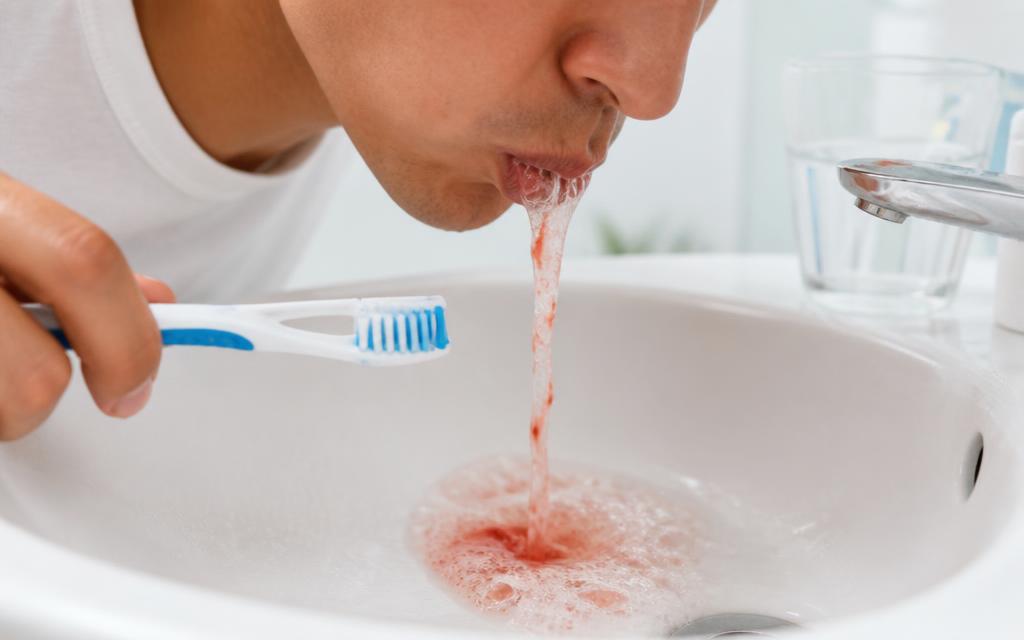
Common symptoms
- • Blood on the toothbrush or in the sink after brushing
- • Blood when flossing or eating firm food
- • Red, puffy or tender gums
- • Persistent bad breath
- • Gums that appear to be pulling away from the teeth
Likely causes
- • Plaque build-up along the gumline (gingivitis)
- • Infrequent or inconsistent brushing and interdental cleaning
- • Smoking, which masks symptoms and worsens gum disease
- • Hormonal changes, including pregnancy
- • Some medicines and uncontrolled diabetes
What can help tonight
- • Brush twice daily for two minutes with fluoride toothpaste
- • Clean between the teeth daily with floss or interdental brushes
- • Use an antiseptic or fluoride mouthwash if recommended for you
- • Stop smoking if you can — it significantly worsens gum disease
- • Avoid stopping brushing the area, even if it bleeds a little
This is general information, not a diagnosis. Always follow the advice given to you by your dentist.
When it's an emergency
- • Rapidly spreading facial or gum swelling
- • Severe pain with bleeding you cannot control
- • Loose teeth alongside fever or feeling very unwell
If any of these apply to you, call 999 or attend A&E now. Outside these signs, NHS 111 can advise out of hours.
What a ToothAid dentist can do online
A dentist can review your symptoms, discuss risk factors like smoking or diabetes, and advise on your brushing and interdental technique. Antibiotics are not usually appropriate for ordinary bleeding gums, which improve with better cleaning rather than medication.
What needs in-person treatment
Ongoing gum disease usually needs a professional clean (scale and polish) and hands-on assessment of gum pockets at a practice, since plaque and tartar below the gumline cannot be removed with a toothbrush alone.
Frequently asked questions
Should I stop brushing an area that bleeds?
No — keep gently but thoroughly cleaning the area. Bleeding is usually a sign of inflammation that needs more consistent cleaning, not less.
How long should it take for bleeding gums to improve?
With consistent brushing and interdental cleaning, mild bleeding often improves within one to two weeks. If it does not, book an assessment.
Can bleeding gums be a sign of something more serious?
Persistent bleeding can be an early sign of gum disease (periodontitis), which can eventually loosen teeth if untreated. It is occasionally linked to other health conditions, which is why it is worth mentioning to a dentist.
Does mouthwash fix bleeding gums?
Mouthwash can help alongside brushing and interdental cleaning, but it is not a substitute for mechanically removing plaque with a brush and floss or interdental brushes.