
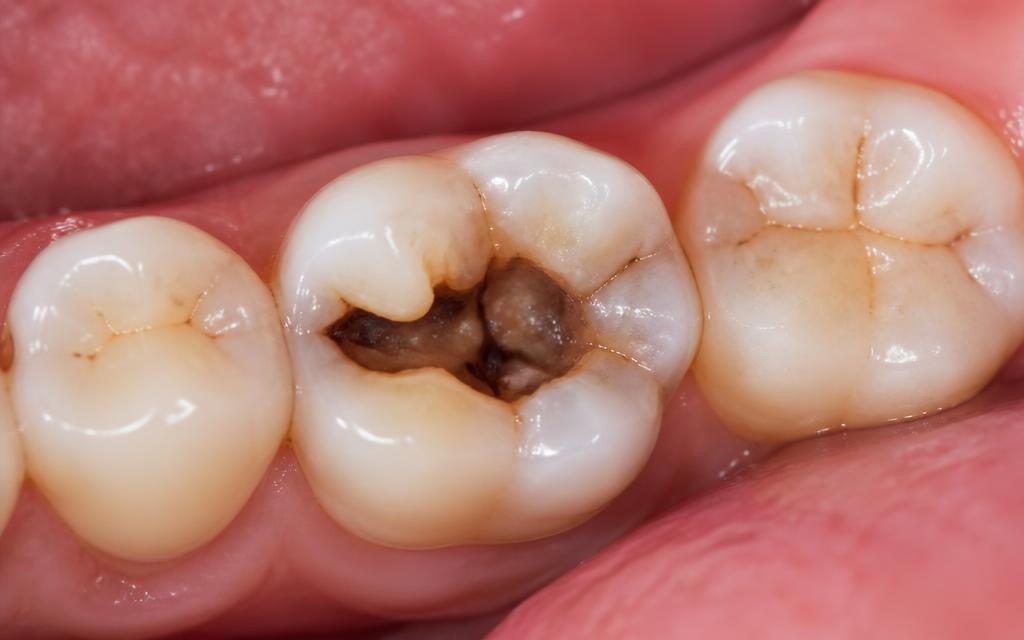
Common symptoms
- • Sensitivity to sweet, hot or cold food and drink
- • A visible dark spot, hole or chalky white patch on a tooth
- • Food repeatedly catching between the same two teeth
- • Ache when biting on one particular tooth
- • No symptoms at all in the early stages
Likely causes
- • Frequent sugary food and drinks feeding the bacteria in plaque
- • Plaque left on the teeth because of missed or rushed brushing
- • Not using a fluoride toothpaste, or rinsing it away after brushing
- • A dry mouth from medication or medical conditions
- • Deep grooves, crowding or old fillings that trap plaque
What can help tonight
- • Brush twice a day with a fluoride toothpaste and spit, do not rinse
- • Clean between your teeth daily with floss or interdental brushes
- • Keep sugary food and drink to mealtimes rather than grazing
- • Use pain relief as directed on the packet if the tooth is sore
- • Avoid extremes of temperature until the tooth has been assessed
This is general information, not a diagnosis. Always follow the advice given to you by your dentist.
When it's an emergency
- • Facial swelling spreading towards your eye or neck
- • Difficulty breathing or swallowing
- • Severe pain with a high temperature and feeling very unwell
If any of these apply to you, call 999 or attend A&E now. Outside these signs, NHS 111 can advise out of hours.
What a ToothAid dentist can do online
A video consultation is a good way to understand what is likely going on, get advice on managing sensitivity or pain, and plan the right next step. Your dentist can also advise on high-fluoride toothpaste and prevention to slow decay while you wait for treatment.
What needs in-person treatment
A cavity cannot be reversed once it has broken through the enamel. You will need an in-person appointment for an examination, usually an X-ray, and a filling — or root canal treatment if the decay has reached the nerve. ToothAid can refer you to a participating practice.
Frequently asked questions
Can a cavity heal by itself?
Very early decay that has not yet formed a hole can sometimes be halted and remineralised with fluoride and better cleaning. Once a hole has formed, it needs a filling.
Why doesn't my cavity hurt?
Decay is painless until it gets close to the nerve. Pain is a late sign, so a cavity that does not hurt still needs treating.
Will antibiotics clear a cavity?
No. Antibiotics do not treat decay. They are only used when there is a spreading infection, and the tooth still needs treatment afterwards.
How quickly does decay get worse?
It varies with diet, cleaning and fluoride exposure. Some cavities progress over years, others within months, especially in children and people with a dry mouth.