
Common symptoms
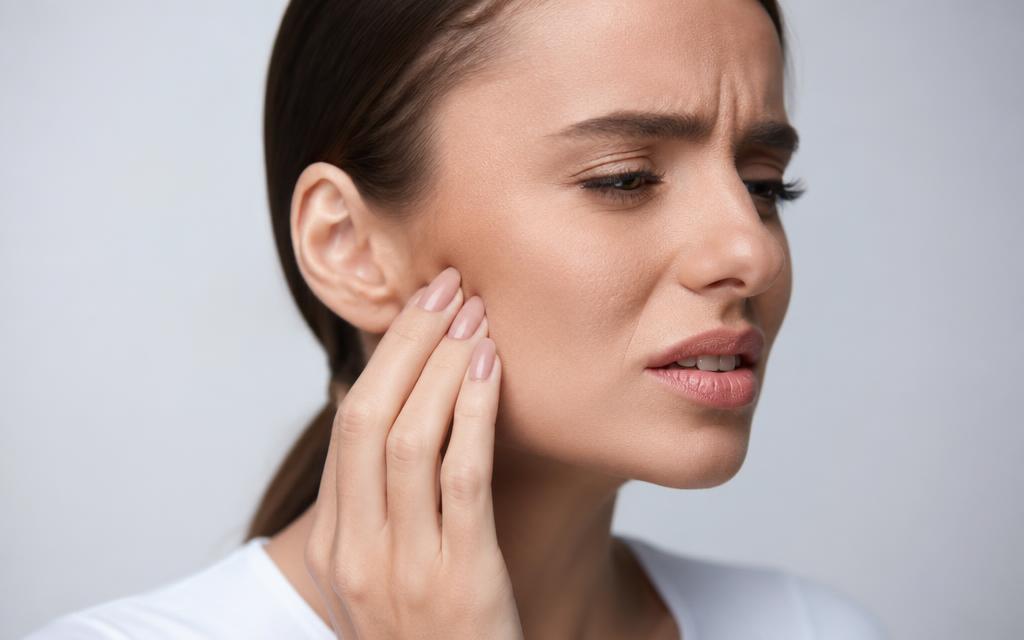
- • Aching around the jaw joint, temple, cheek or ear
- • Clicking, popping or grating when you open and close
- • Jaw stiffness, especially first thing in the morning
- • Difficulty opening wide, or the jaw briefly locking
- • Headaches, and tenderness of the chewing muscles
Likely causes
- • Clenching or grinding the teeth, often linked to stress
- • Habits such as nail biting, chewing gum or resting on your hand
- • Prolonged wide opening, for example during dental treatment
- • Trauma to the jaw
- • Joint changes such as disc displacement or arthritis
What can help tonight
- • Eat a soft diet and cut food into small pieces for two to three weeks
- • Avoid chewing gum, hard foods, wide yawning and nail biting
- • Apply a warm compress to the jaw muscles for 10 to 20 minutes
- • Take pain relief as directed on the packet if needed
- • Notice and release daytime clenching — teeth should be apart at rest
This is general information, not a diagnosis. Always follow the advice given to you by your dentist.
When it's an emergency
- • A jaw that is locked open or that you cannot close
- • Jaw pain after a significant blow or accident, with a change in your bite
- • Jaw or facial pain with chest pain, breathlessness or arm pain — call 999
If any of these apply to you, call 999 or attend A&E now. Outside these signs, NHS 111 can advise out of hours.
What a ToothAid dentist can do online
TMD is well suited to remote assessment. A dentist can take a careful history, guide you through jaw movements on camera, rule out a dental cause for the pain, and give you a structured self-care and exercise plan.
What needs in-person treatment
If symptoms do not improve, you may need a custom night guard, or referral for physiotherapy or specialist oral medicine assessment. A dental cause such as a cracked tooth also needs examining in person.
Frequently asked questions
Is clicking in my jaw dangerous?
Painless clicking is common and usually needs no treatment. Clicking with pain, locking or a limited opening is worth assessing.
How long does TMD take to settle?
Most people improve substantially within a few weeks of consistent self-care, though symptoms can come and go with stress.
Will a night guard cure it?
A guard protects your teeth and often reduces morning pain, but it works best alongside habit changes and jaw exercises.
Could my jaw pain be coming from a tooth?
Yes. Tooth and jaw pain can feel very similar, which is why a dentist should be the first person to assess it.